Faq & Insights
See our FAQ for more information on the use of MTR® beams.
How is node confinement managed with MTR® beams?
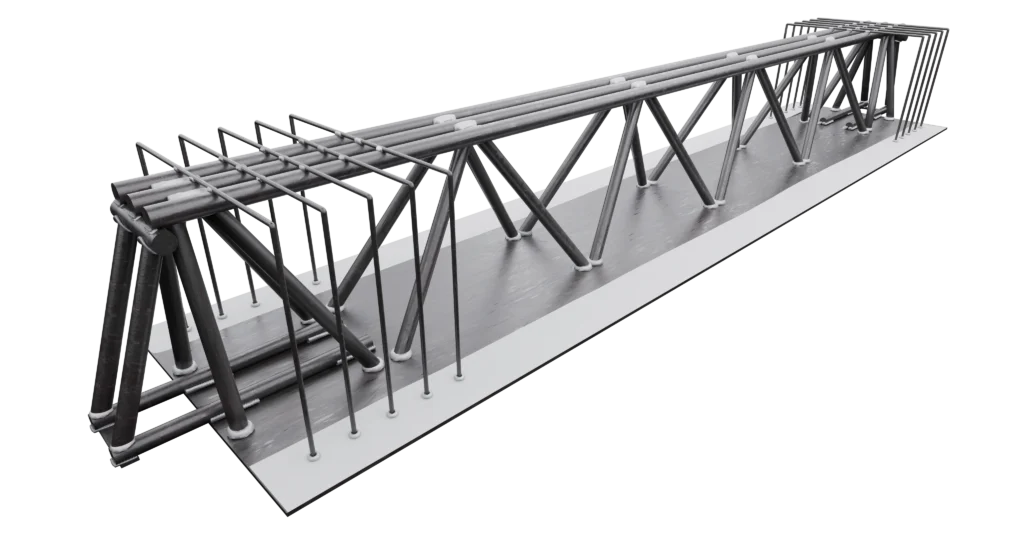
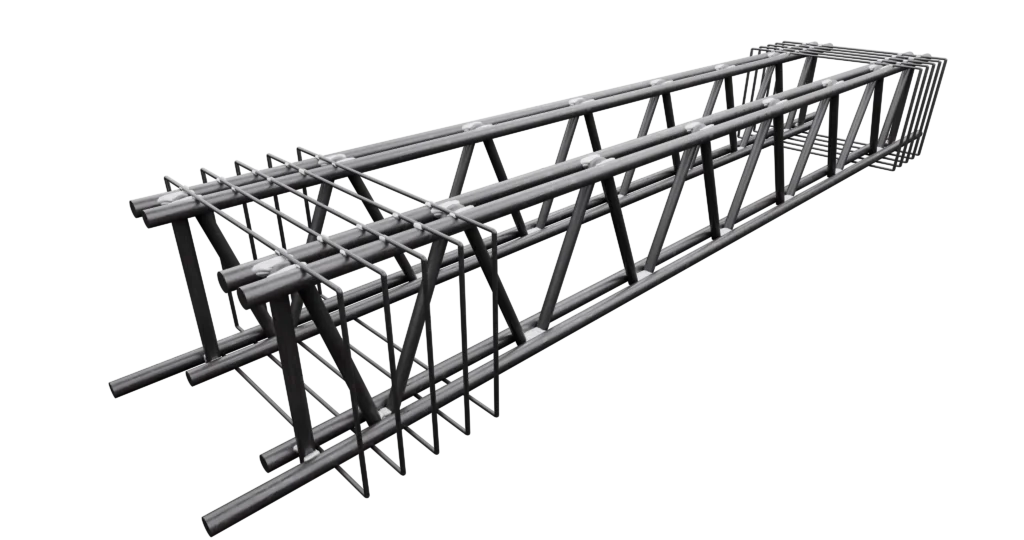
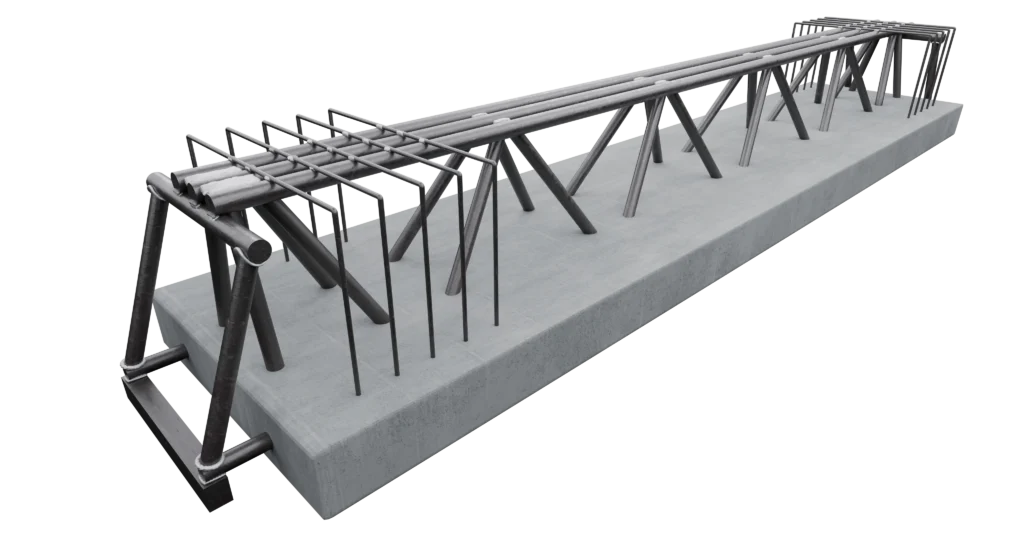
MTR® beams are equipped with brackets at the end for node confinement. These brackets are not for shear absorption (fully absorbed by the metal web). Their purpose is to comply with regulatory requirements regarding proper confinement of the bending moment reinforcement of beam-pillar nodes.
Are MTR® beam reinforcements part of the verification of the node strength hierarchy, or only with the additional abutments?
For the hierarchy of strengths, only the additional reinforcement at the nodes is considered. In fact, in the critical zone, at the beam-pillar nodes, only the B450C steel supplementary reinforcement acts for the bending moment.
How are MTR® beams calculated? CDA, CDB or nondissipative?
MTR® beams can be calculated in any of the modes required by the standards.
In fact, MTR® beams designed in CDA and CDB are subject to additional verifications to ensure the hierarchy of strengths within the beam, making sure that the shear strength exceeds the bending moment strength. MTR beams designed with NON-DISSIPATIVE are designed by ensuring that the MTR® beam remains in the elastic field throughout the envelope of stresses to which it is subjected.
In linear analysis, how to evaluate the stiffness of MTR® beams in the second phase?
The stiffness of the MTR® beams in the stiffness matrix of the calculation model is calculated on the basis of the geometric cross-section in a similar way to reinforced concrete beams, so that the contribution of MTR® beams to the stiffness matrix in relation to ordinary reinforced concrete elements is not overestimated, leading to errors in the results in terms of displacements and thus stresses.
With the use of MTR® beams, are there advantages in terms of reducing reinforcement in the nodes, whose verifications are usually critical in in-situ reinforced concrete structures?
Yes in the case of using self-supporting MTR® beams, the reinforcements at the nodes are reduced compared to a counterpart ordinary concrete structure. In fact, the effect of self-supporting involves a reduction in the negative moment at the ends of the beams, all the first-phase load being absorbed by the metal truss, which behaves like a WARREN-type metal truss simply supported at the ends. This effect becomes more pronounced as the first-phase load increases (and particularly with the use of self-supporting slabs) and as the span of the MTR® beam increases.
Is it better to use MTR® A beam, MTR® T beam or MTR® C beam?
The choice of the type of MTR® beam depends on the design requirements and the performance to be achieved. Metal.Ri's technical department is at the disposal of designers and contractors to guide them in choosing the optimal combination, depending on the performance requirement to be achieved through the use of MTR® beams.