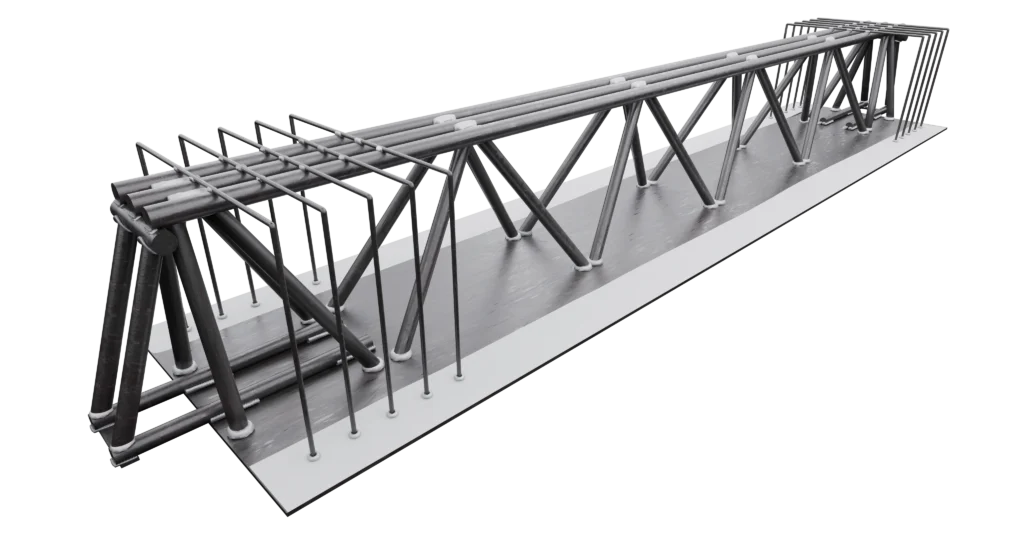
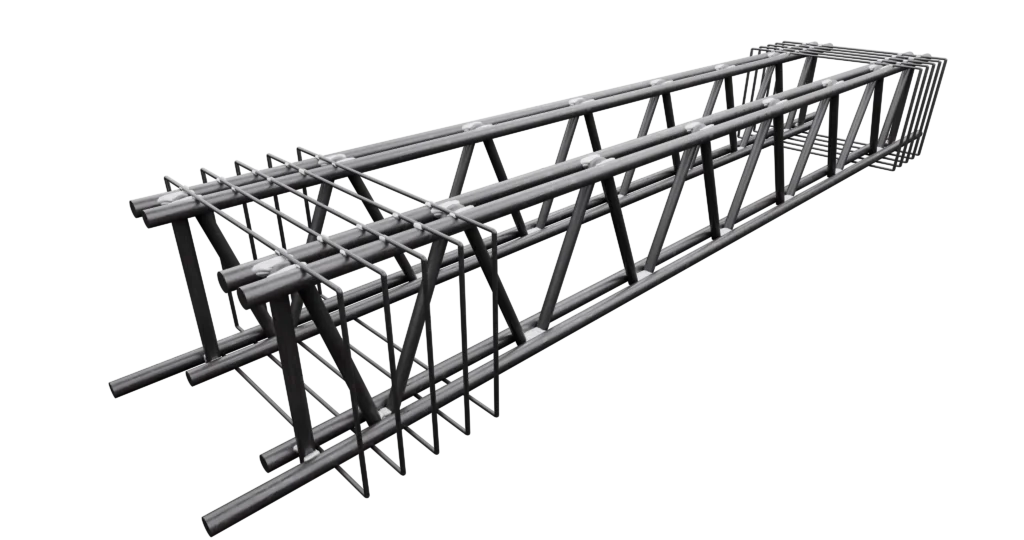
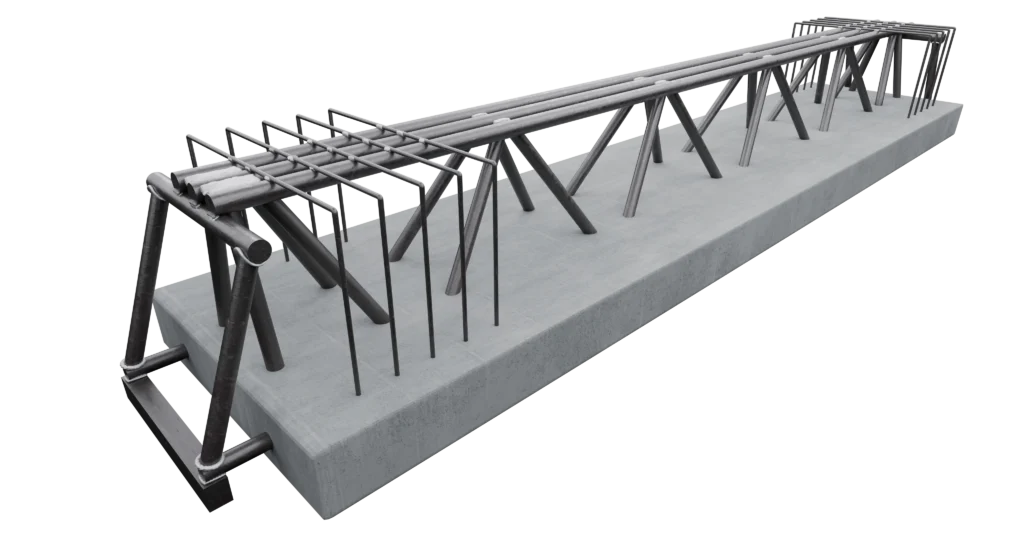
Designing with MTR® System
MTR® Plug-ins and Software
Innovative digital tools for safe and accessible structural design
The digital transition of MTR® technology
Structured design using MTR® technology is easily implemented with MTR® applications made bypartner company INFO.MTR.
The goal of INFO.MTR is to provide an open digital framework that offers easily usable, secure, and quality design services for MTR® technology that are designed to ensure a transparent and open relationship with structural designers.
INFO.MTR has developed mathematical models specifically calibrated to interpret the operation of the MTR® building system, in compliance with the Structural Eurocodes and under the ISO 9001 quality regime. These mathematical models are easily applied thanks to the development of plug-ins and software that integrate with the main calculation programs nationally and internationally.

Modular applications for beam predimensioning
With the modules developed by INFO.MTR , designing structures with MTR® beams is easier and faster. MTR® software libraries are capable of native dialog with the most popular structural calculation systems(CDS Win, Seismicad, PROSAP).
All designers will be able to obtain the predimensioning of beams (evaluating their optimal sections according to the design) and perform precise and detailed verifications of the entire C.A. structure already at the preliminary stage. An iterative and collaborative approach, in which the client is put at the center of the development process.

MTR® software for structural design
To design the entire structure with MTR® beams and propose the best construction solution, INFO.MTR has developed the Software MTR® calculation platform, with Microsoft technology-Component Object Model (COM) and specific Application Program Interface (API).
Metal.Ri's technical department, through the use of the software, will be able to process structural calculations and executive drawings, interfacing fully automatically with the most common structural software existing on the Italian and European market(SAP2000, TEKLA STRUCTURES, AXIS, ETABS).
Phase 1, phase 2, and serviceability limit state verifications are performed on individual structural elements, as required by current standards (NTC 2018 and Eurocodes)
In one simple operation, the engineering department will be able to provide files in .dxf format for graphics, .ifc format for the three-dimensional model of the structure (which can also be viewed in a BIM environment), and .rft format for calculation printouts.

From design to production
The digital transition process is completed through the translation of design solutions stored in design software into Metal.Ri. commercial bids. Subsequently, this information is processed into worksheets for prefabrication on the shop floor, ensuring total transparency and maximum consistency between the technical specifications of the design and the performance of the construction components. Each element is manufactured in the factory and delivered directly to the construction site, ensuring quality, efficiency and compliance with design requirements
The benefits of MTR® technology
The adoption of MTR® technology revolutionizes the design and prefabrication industry.
Integration with leading calculation software ensures an efficient and shareable workflow, optimizing each phase of the project. Thanks to detailed verifications and accurate results, the design process ensures maximum accuracy and quality.
Reliability
Detailed verifications and comprehensive results
Cooperation
Ability to work collaboratively and in a coordinated manner
Security
Detection of errors, interferences and omissions
Integration
Dialogue with major calculation software
Accedi all’area riservata e guarda i webinar tecnici su CDS Win, PRO_SAP e Sismicad
Our FAQ
Do you want to start designing with MTR® but have doubts?
Check out our FAQ for more information on frequently asked questions regarding designing with MTR® System.